Our story
Hyderabad Food Capital
Three Ph.D. researchers from Malabar. Ten years. Every biryani in Hyderabad.
Origin
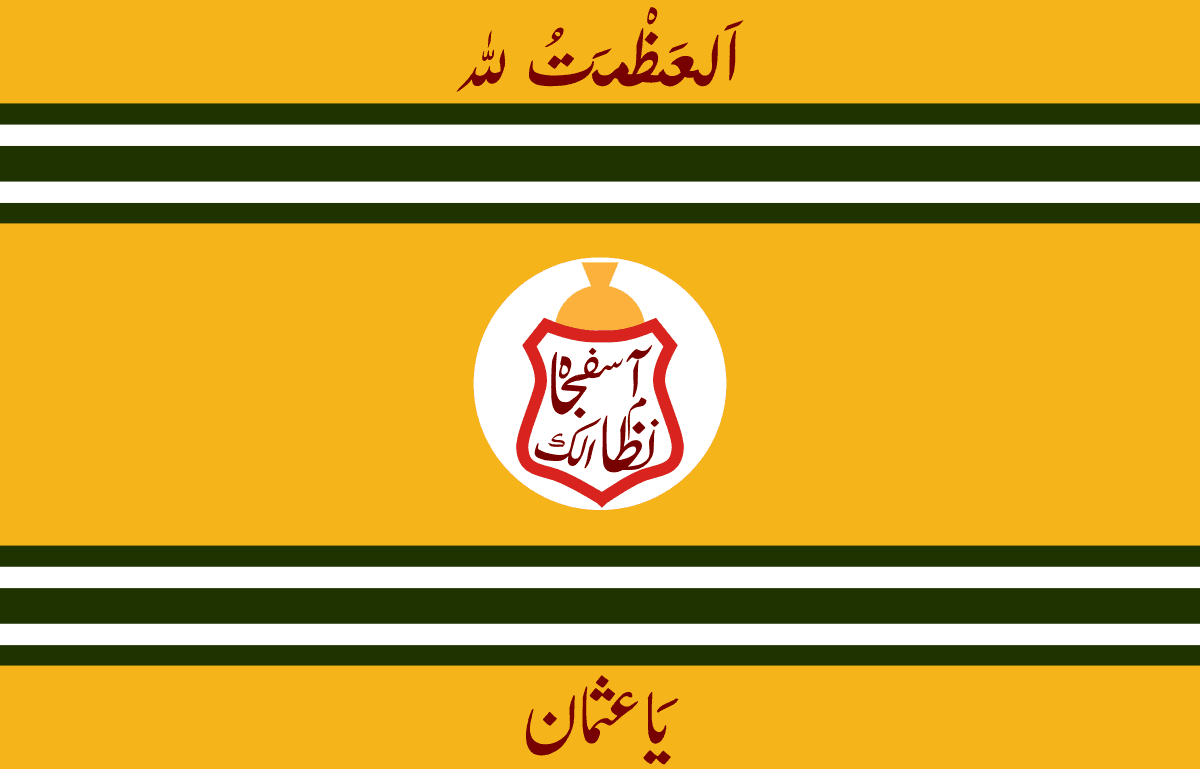
On the Eve of his Shikar, Nizamul Mülk, Asaf Jah I met his pīr. Tired and hungry, he asked for food. Pīr came with a bunch of Kulchas folded in a yellow cloth and asked him to eat as much as he wanted. He was full at the seventh. “You will rule for seven generations”, Pīr predicted. In the honor of the event, Nizam declared a yellow flag with a Kulcha in its middle. Ever heard of any empires, dynasties or nations with a food as a symbol in the flag? Now, no wonder in saying, Hyderabad, the universal food capital.
Generations passed, and during the seventh Nizam, India annexed Hyderabad. Nizam gone, Kulcha remained. Yellow in the flag gone, but it remains in Biriyani.
About us
“Where did all our fellowship money go?!” On one of the last days of our fellowship period, we asked ourselves. The answer came in the form of a bill that arrived with the finger bowls on our table. This website provides the answer to that question.
We, Faseeh, Mubashir, and Shahal, arrived in Hyderabad starting from 2014 as students at the University of Hyderabad, hailing from different parts of Malabar. Our journey to discover the tastes of Hyderabad began there. The money we received from our parents for our monthly expenses and the fellowship we received as Ph.D. researchers were mostly spent on Biryani and Mandi.
Throughout our Ph.D. research, we have traveled across borders, exploring the meats and rice of Arabia, the Kebaps and Shawarmas of Turkey, the meatballs of Scandinavia, the pastas of Italy, the schnitzels and Doners of Germany, and much more, which have expanded our taste buds. Nonetheless, all these cuisines come together in Hyderabad, a city that we like to call “the Universal food capital.”
As students in Hyderabad compiling this list, we have mainly included budget-friendly restaurants. This list will also be evolving constantly, as it should. Our primary concern is for the travelers who come to Hyderabad, as we believe that no tourist should miss any of the top Biryanis in Hyderabad. We have included tips and tricks that we wish we knew when we visited some places. Nothing beats the sight of a piping hot Hyderabadi biryani on a hungry afternoon. It's just as fantastic as seeing the city from the Bala Hisaar of Golconda Fort or watching the crowds move around the Charminar.
A note on biryani
Which is the best Hyderabadi biryani?
We don't engage in Biryani battles. Which biryani is best? (Hyderabadi of course!) But which is the best Hyderabadi biryani? Well, we won't discriminate among Hyderabadi biryanis (unless it's a Paradise biryani). There is no one best biryani to suggest, but many. We may have our own biases, owing to where we are located and our taste buds. We do make it a point to keep those biases aside and explore as much as we can and we are happy to share around 10 years of our experience.
Differences among Hyderabadi biryani are often subtle. For example, many restaurants won't use cloves in their masala which results in an entirely different flavour profile. Some may overcook their rice a bit giving it a different texture. There are some 'elite' biryanis that use real saffron. Then there is the ever difficult decision to make, mutton, chicken or beef biryani. Well, that's up to personal preferences. But a word of wisdom, a good chicken biryani can any day overtake a mutton or beef biryani from a restaurant. Although the rice of mutton biriyani is more flavorful, the chicken pieces can hold more masala and hence are always reliable than mutton at restaurants. Yet another difference is the Zafrani and Sufiyani. Zafrani is more colourful owing to the use of red chilli and saffron. Sufiyani or white biryani uses green chillies and dry fruits paste. It is said that a Sufiyani Biryani beats Zafrani any day, but from our experience it is available only in one restaurant that too in bulk quantity. It is more commonly served in shaadi daawats. Then there is our ever-favorite Kalyani Biryani, also known as the “poor man's” Hyderabadi Biryani. Kalyani Biryani traces its lineage from the Kalyani Nawabs of Basavakalyan, Bidar. Currently, it is synonymous with beef biryani, but this may not have been the case in the past. The addition of tomato, coriander, and jeera powder, along with short-grain Sona Masoori rice, makes all the difference. It's unclear whether tomatoes are still used in Kalyani biryani, but it definitely retains a distinct flavor profile.